
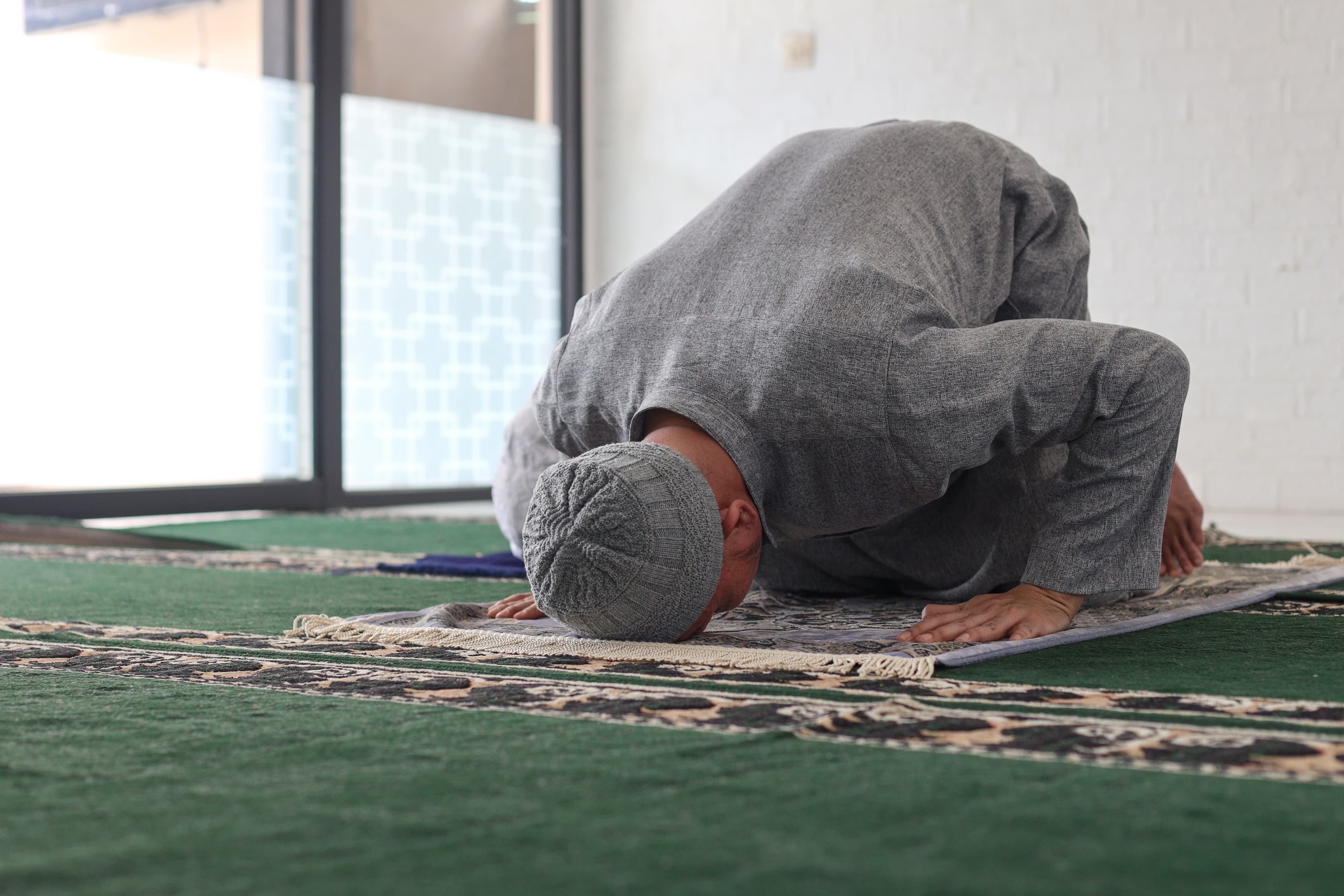
Five times a day, Muslims around the world pause whatever they are doing, turn toward Mecca, and stand before Allah in prayer. This is Salah, one of the five pillars of Islam and one of the most central acts of worship in the faith. It is a direct form of communication with Allah, a means of spiritual connection, purification, and discipline that structures the Muslim's day and keeps the heart oriented toward what matters most.
Salah is not a ritual performed out of obligation alone. It is a conversation, a returning, a moment of genuine presence before the Creator. Understanding its components helps the believer perform it correctly and, more importantly, perform it with the awareness and devotion it deserves.
Why do we pray? Watch this short reflection: Why Do We Pray?
Purity (Taharah)
Before performing Salah, a Muslim must be in a state of physical and ritual purity, known as Taharah. This is achieved through Wudhu, the ritual ablution performed with water before prayer, or through Ghusl, a full ritual bath required in cases of greater impurity. Purity of the body is a reflection of the reverence and attentiveness with which a Muslim approaches standing before Allah.
Learn how to perform Wudhu: How to Perform Wudhu
Learn how to perform Ghusl: How to Perform Ghusl
Covering the Awrah
Muslims must ensure that their bodies are appropriately covered during Salah. For men, this involves covering the area from the navel to the knees. For women, it involves covering the entire body except for the face and hands. This modest covering is part of approaching the prayer with dignity and respect.
Facing the Qiblah
During Salah, Muslims face the Kaaba in Mecca, the direction known as the Qiblah. The exact direction varies depending on one's geographical location relative to Mecca, and today it can easily be determined through a compass or a smartphone. Facing the Qiblah unites Muslims across the world in a single, shared direction of worship.
Intention (Niyyah)
Before beginning each prayer, a Muslim makes a sincere intention in their heart to perform that specific prayer. The intention does not need to be spoken aloud. What matters is that it is present in the mind and heart, a conscious turning toward Allah before the prayer begins.
The Takbir: Beginning the Prayer
Every prayer opens with the recitation of Allahu Akbar, meaning Allah is the Greatest. This opening declaration is known as Takbirat al Ihram, and it marks the formal commencement of the prayer. With these words, the believer steps out of the ordinary flow of daily life and into a dedicated moment of worship.
Recitation of Surah al Fatihah
The recitation of Surah al Fatihah, the Opening Chapter of the Qur'an, is an essential part of every unit of prayer, known as a Rak'ah. It is followed by the recitation of additional verses or chapters from the Qur'an, depending on the specific prayer and the Rak'ah being performed. The Prophet Muhammad (peace be upon him) described Surah al Fatihah as the greatest chapter in the Qur'an, and reciting it is at the heart of every Salah.
Learn how to recite Surah al Fatihah: How to Recite Surah al Fatihah
How to Read the Qur'an series with MyShahada: How to Read the Qur'an
Rukoo (Bowing)
Each Rak'ah includes a bowing posture known as Rukoo. The worshipper bends from the waist with the back kept straight, lowering themselves in reverence before Allah. In this position, specific supplications praising Allah are recited, such as Subhana Rabiya al Azim, meaning Glory be to my Lord, the Most Great.
Step by step guidance on Rukoo: How to Perform Rukoo
Sujood (Prostration)
Sujood is the act of prostration, considered among the most sacred moments in Salah. The worshipper places their forehead, nose, both palms, both knees, and the toes of both feet on the ground, lowering themselves completely before Allah in an expression of submission and humility. In this position, the believer recites Subhan Rabiya al A'la, meaning Glory be to my Lord, the Most High. It is said that the servant is closest to Allah during sujood.
Step by step guidance on Sujood: How to Perform Sujood
Tashahhud
In the final Rak'ah of each prayer, the worshipper sits and recites the Tashahhud, a declaration of faith and a sending of blessings upon the Prophet Muhammad (peace be upon him). This is followed by the Salat al Ibrahimiyah, in which the believer invokes blessings upon the Prophet and his family, just as blessings were invoked upon Prophet Ibrahim (peace be upon him) and his family.
Step by step guidance on the Tashahhud: How to Perform the Tashahhud
Salaam: Ending the Prayer
Salah concludes with the Salaam. The worshipper turns their head to the right and says Assalamu Alaikum wa Rahmatullah, meaning Peace and the mercy of Allah be upon you, and then repeats the same to the left. With these words, the prayer comes to a close, and the believer returns to the world carrying the peace and awareness cultivated in those moments of worship.
The Heart of Islamic Belief
Performing each component of Salah correctly and with genuine devotion is essential to its validity and acceptance. But beyond the mechanics, Salah is an opportunity that comes five times every day, an invitation to pause, to remember, and to reconnect with the One who created you. No matter what the day brings, the prayer is always there, a constant and reliable anchor for the Muslim heart.
Watch this detailed guide on how to perform the full prayer: How to Perform Salah