
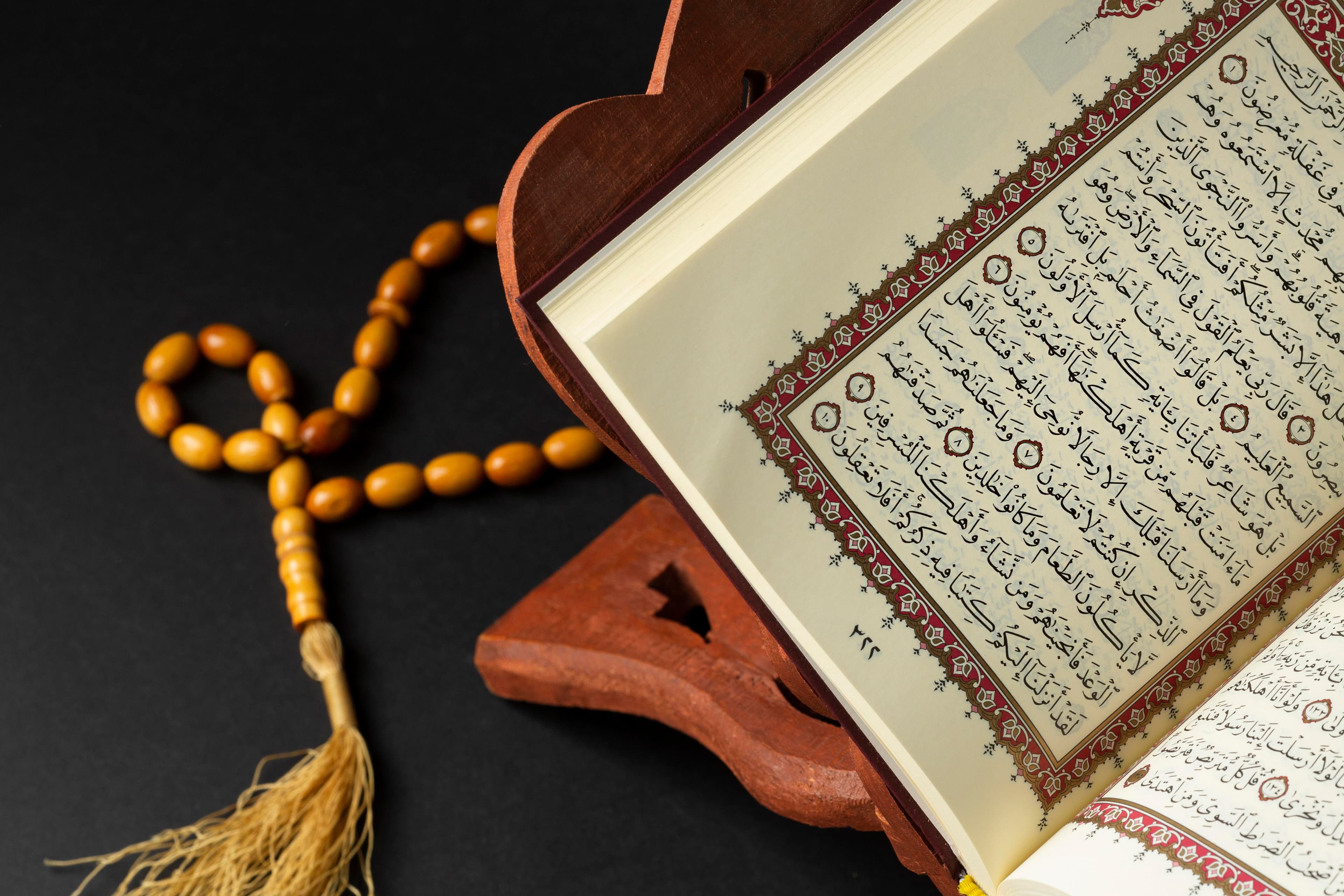
Among the foundational beliefs of Islam is the recognition that Allah did not leave humanity without guidance. Throughout history, He sent revelations to His prophets as a mercy and a light for the people of their time. These revelations, known as the divine books, cover matters of faith, worship, morality, and righteous living. Muslims believe that Allah revealed scriptures to various prophets, including the Torah, the Psalms, and the Gospel, before sending the final and complete revelation, the Qur'an, to the Prophet Muhammad (peace be upon him). While earlier scriptures are respected as divine in origin, the Qur'an stands as the ultimate source of guidance and authority in Islam.
The Qur'an (Al Qur'an)
The Qur'an is the central religious text of Islam and is believed to be the literal word of Allah as revealed to the Prophet Muhammad (peace be upon him) over a period of approximately 23 years through the Angel Gabriel, known in Arabic as Jibreel. It is regarded as the complete and perfectly preserved word of Allah, unchanged from the moment of its revelation to this day.
Allah Himself affirms the unmatched nature of the Qur'an:
""قُل لَّئِنِ ٱجْتَمَعَتِ ٱلْإِنسُ وَٱلْجِنُّ عَلَىٰٓ أَن يَأْتُواْ بِمِثْلِ هَـٰذَا ٱلْقُرْءَانِ لَا يَأْتُونَ بِمِثْلِهِۦ وَلَوْ كَانَ بَعْضُهُمْ لِبَعْضٍۢ ظَهِيرًۭا" (سورة الإسراء 17 : 88)
"Say, ˹O Prophet,˺ 'If ˹all˺ humans and jinn were to come together to produce the equivalent of this Qur'an, they could not produce its equal, no matter how they supported each other.'" Surah al-Isra (17:88)
The Qur'an serves as a comprehensive guide for Muslims in all matters of life. It consists of 114 chapters, known as Surahs, each containing verses called Ayahs, all in the Arabic language. Its subject matter spans theology, law, ethics, stories of the prophets, and guidance for personal conduct. For Muslims, the Qur'an is not simply a historical text. It is a living source of wisdom and direction that speaks to every generation.
Learn more about the Qur'an: Introduction to the Qur'an
For further reading on how the Qur'an was preserved across generations: How the Qur'an Was Preserved During the Prophet's Time
The Torah (Al Tawrah)
Muslims believe that the Torah was revealed by Allah to the Prophet Moses (Musa, peace be upon him) as guidance for the Children of Israel. It is recognized in Islam as a divine scripture containing guidance and laws sent by Allah for its time. While the Torah is affirmed in the Qur'an as a genuine revelation, Muslims also believe that it has undergone alterations over the course of history, meaning that the Torah as it exists today is not identical to the original revelation given to Prophet Musa (peace be upon him).
The Psalms (Al Zabur)
The Psalms, known in Arabic as Al Zabur, are believed to have been revealed by Allah to the Prophet David (Dawud, peace be upon him) for the purpose of worship and spiritual guidance. While the Psalms are not as extensively discussed in Islamic tradition as some of the other scriptures, they are still recognized as a sacred revelation sent by Allah and are therefore held in respect by Muslims.
The Gospel (Al Injil)
Muslims believe that the Gospel, known in Arabic as Al Injil, was revealed by Allah to the Prophet Jesus (Isa, peace be upon him) as a message of guidance for the people of his time. It is important to understand that the Injil referred to in the Qur'an is not the same as the four Gospels found in the New Testament of the Christian Bible. Rather, it refers to the original divine revelation given directly to Prophet Isa (peace be upon him). Muslims believe that this original revelation has been altered and distorted over time, so that what exists today does not fully reflect the message as it was first revealed.
Learn more about the Torah, Psalms, and Gospel in Islam: The Previous Divine Books
The Heart of Islamic Belief
Muslims respect all of the divine books as revelations that came from Allah, each serving as guidance for the people and time to which they were sent. At the same time, Muslims believe that the earlier scriptures underwent changes and alterations over the centuries, which is precisely why Allah sent a final, complete, and perfectly preserved revelation in the form of the Qur'an. The Qur'an therefore holds the highest authority in Islam, not out of dismissal of what came before, but because it represents Allah's final and most complete guidance for all of humanity until the Day of Judgment.