
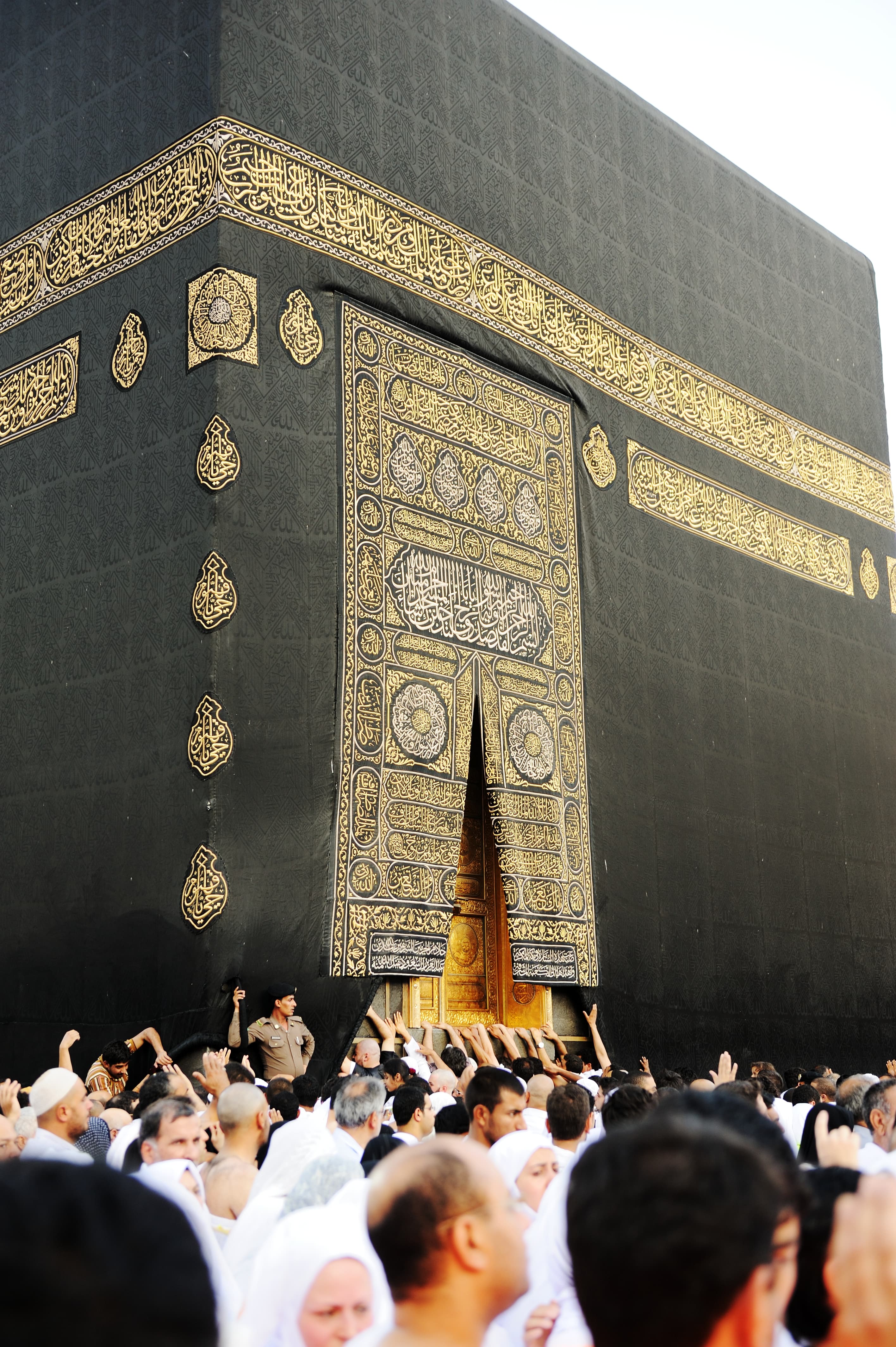
Once a year, millions of Muslims from every corner of the earth converge on a single point. They leave behind their homes, their comforts, their social distinctions, and their ordinary lives. They dress in simple white garments and stand together as equals before Allah. This is Hajj, the pilgrimage to Makkah, and it is one of the most powerful experiences a human being can undertake.
Hajj is the fifth pillar of Islam. Every adult Muslim who is physically and financially able is required to perform it at least once in their lifetime. It takes place annually during the Islamic month of Dhul Hijjah, and its obligation is established directly by Allah in the Qur'an:
"وَلِلَّهِ عَلَى ٱلنَّاسِ حِجُّ ٱلْبَيْتِ مَنِ ٱسْتَطَاعَ إِلَيْهِ سَبِيلًۭا"
"Pilgrimage to this House is an obligation by Allah upon whoever is able among the people." Surah Al Imran (3:97)
The Purpose of Hajj
Hajj is not simply a journey to a sacred place. It is a journey of the heart and soul. It is an act of complete submission to Allah, a living demonstration of the unity of all Muslims regardless of race, nationality, or social status, and a profound opportunity for repentance and spiritual renewal. Pilgrims arrive seeking forgiveness and purification from sin, and the Prophet Muhammad (peace be upon him) gave the most beautiful assurance to those who undertake it sincerely:
"مَن حَجَّ لِلَّهِ فَلَمْ يَرْفُثْ⸲ ولَمْ يَفْسُقْ⸲ رَجَعَ كَيَومِ ولَدَتْهُ أُمُّهُ"
"Whoever performs Hajj for the sake of Allah and avoids indecent speech and sin, returns like the day his mother gave birth to him." Sahih al Bukhari and Muslim
To return from Hajj as though newborn, cleansed of everything that came before, is a mercy that only Allah could offer.
The Main Rites of Hajj
Hajj follows a sequence of sacred rites, each carrying its own profound meaning and rooted in the history of the prophets.
Ihram is the state of purity and intention that marks the beginning of Hajj. Men don two plain white garments, and women wear modest dress. In this state, all pilgrims are outwardly equal, with no visible markers of wealth or status. Upon entering Ihram, the pilgrim begins reciting the Talbiyah: "Labbayk Allahumma labbayk", meaning "Here I am, O Allah, here I am." It is a declaration of presence and devotion, an answer to the call of Allah.
Tawaf is the act of circling the Ka'bah seven times in a state of worship and remembrance of Allah. The Ka'bah, the sacred house of Allah at the center of Masjid al Haram, becomes the axis around which the pilgrim moves in reverence, joining the timeless circle of those who have worshipped here across the centuries.
Sa'i is the walking back and forth seven times between the hills of Safa and Marwah. This rite honors the memory of Hajar, the wife of Prophet Ibrahim (peace be upon him), who ran between these two hills in search of water for her infant son Ismail. Her trust in Allah was rewarded with the miracle of Zamzam, the blessed well whose water flows to this day.
The Standing at Arafah on the ninth of Dhul Hijjah is considered the very heart of Hajj. Pilgrims gather on the plain of Arafah and spend the day in supplication, tears, and deep reflection. It is said that no day sees more people freed from Hellfire than this one. To stand at Arafah with a sincere heart is to stand at one of the most significant moments a human being can experience in this life.
Muzdalifah and Mina follow the standing at Arafah. Pilgrims spend the night at Muzdalifah under the open sky, then return to Mina to throw pebbles at the stone pillars, a symbolic act of rejecting Shaytan and his whispers, echoing the action of Prophet Ibrahim (peace be upon him).
The Animal Sacrifice is offered in remembrance of Prophet Ibrahim's obedience to Allah when he was commanded to sacrifice his son. This act of sacrifice is also observed by Muslims around the world on Eid al Adha, connecting the global community to the rites being performed in Makkah.
The pilgrimage concludes with shaving or cutting the hair, followed by a final Tawaf around the Ka'bah before departing Makkah. With these final acts, the pilgrim completes one of the most transformative journeys of their life.
The Spirit of Hajj
The outward rites of Hajj are only as meaningful as the inward state that accompanies them. Patience, humility, and a heart fully focused on Allah are the qualities that bring Hajj to life. Arguments, pride, and complaints have no place in this sacred journey. Every moment is an opportunity for remembrance of Allah, for supplication, and for gratitude. The crowds, the heat, the physical demands — all of it becomes an act of worship when the intention is right and the heart is present.
Explore how the legacy of Prophet Ibrahim continues to be a living reality for Muslims today: Living Abraham's Legacy of Hajj
After Hajj
Those who complete Hajj with sincerity return home carrying something that cannot be bought or earned in any other way. They return cleansed, renewed, and with a closeness to Allah that reshapes how they see themselves and the world around them. Many describe it as the most powerful experience of their lives, a before and after that marks the beginning of a deeper, more intentional relationship with their faith.
Watch this two part series by Shaykh Omar Suleiman on the sacred pilgrimage of Hajj, its significance, how it was established, and how it is observed today:
Hajj: The Sacred Pilgrimage Part 1
Hajj: The Sacred Pilgrimage Part 2
The Heart of Islamic Belief
Hajj is the pillar of Islam that most visibly unites the global Muslim community. For a few sacred days, the differences that divide humanity dissolve. Rich and poor, young and old, from east and west, all stand together in the same garments before the same Lord. It is a glimpse of what the Day of Judgment will look like, and a reminder that in the end, the only thing that matters before Allah is the sincerity of the heart that stands before Him.